Select one or more regions of interest
by clicking on the filter elements
Drag the filter elements horizontally,
and select one or multiple
thematic areas of interest.
Improving Soil Organic Content on Vegetable Farms in Brittany: Material, Technical and Cultural levers
France
Atlantic Zone
Benefits of the practice
- Increased water retention
- Carbon storage
- Improved soil structure and fertility
Production system(s)
Thematic Area(s)
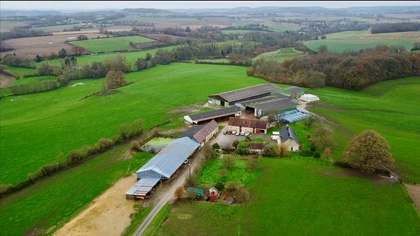
An organic open-field vegetable farm in Nord Finistère (France, Brittany region) is addressing the challenges of climate change by implementing innovative solutions to improve soil health and enhance resilience.
1. Setting up a composting platform (under consideration)
In response to the increasing scarcity of manure, the farm aims to compost its own organic waste (particularly 55 tonnes of leek waste) instead of sending it to a nearby biogas plant. This solution would:
⦁ Increase self-sufficiency in organic matter, which is essential for soil fertility and water retention.
⦁ Reduce tractor trips, thereby lowering the environmental impact.
⦁ Produce a carbon-rich soil improver that enhances soil structure and biological activity.
2. Optimizing plant cover
The farmer systematically plants cover crops after harvests to enrich the soil. He is participating in an economic and environmental interest group to refine species selection and mixtures suited to vegetable rotations. An innovative seeding system has been developed to:
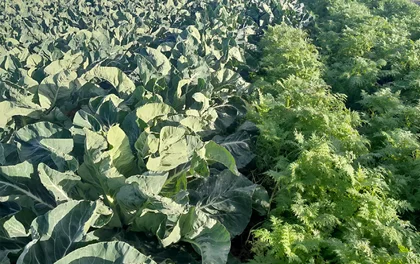
⦁ Sow cover crops in the uncultivated alleys of cauliflower fields, increasing carbon storage and soil structure.
⦁ Maximize biomass production to improve water retention and fertility.
To reduce soil compaction, the farmer has equipped a tractor with a remote tyre inflation system. Air pressure is reduced when working in the fields (harvesting winter vegetables, tilling the soil, and sowing cover crops). Mini-profiles have been created to observe the effect of this equipment during leek harvests in the winter of 2023–2024.
These practices enhance the farm’s resilience by limiting erosion, increasing carbon storage, and improving the soil’s ability to withstand drought and excess water.
Une exploitation bio de légumes plein champ en Nord Finistère fait face aux défis du changement climatique en mettant en place des solutions innovantes pour améliorer la santé de ses sols et renforcer leur résilience.
1. Mise en place d’une plateforme de compostage (en réflexion)
Face à la raréfaction du fumier, l’exploitation souhaiterait composter ses propres déchets organiques (notamment 55 tonnes de déchets de poireaux) au lieu de les envoyer à un méthaniseur voisin. Cette solution permettrait :
⦁ D’être plus autonome en matière organique, essentielle pour la fertilité et la rétention en eau des sols.
⦁ De limiter les trajets et donc l’impact environnemental.
⦁ De produire un amendement riche en carbone, améliorant la structure et la vie biologique du sol.
2. Optimisation des couverts végétaux
L’exploitant utilise systématiquement des couverts végétaux après les cultures pour enrichir ses sols. Il participe à un GIEE (Groupe d’Intêret Economique et Environnemental) pour affiner ses choix d’espèces et de mélanges adaptés aux rotations légumières. Un semis innovant a été développé :
⦁ Semer des couverts dans les allées non cultivées des champs de chou-fleur, afin de stocker davantage de carbone et d’améliorer la structure du sol.
⦁ Maximiser la biomasse produite pour une meilleure rétention en eau et une fertilité accrue.
Afin de réduire le tassement des sols, l’exploitant a également équipé un tracteur d’un système de télégonflage des pneumatiques. La pression d’air est réduite lors des travaux des champs (récoltes de légumes d’hiver, travail du sol, semis de couverts). La réalisation de mini-profils a permis d’observer l’effet de ce matériel lors des récoltes de poireaux pendant l’hiver 2023-2024.
Ces pratiques renforcent la résilience de l’exploitation en limitant l’érosion, en augmentant le stockage du carbone et en améliorant la capacité des sols à faire face aux sécheresses et aux excès d’eau.
Improving soil health to cope with climate change: innovative solutions from an organic field- grown vegetable farm
Here we present the farm of Lionel, one of the ‘Pilot Demo Farmers’ involved in Climate Farm Demo. This organic open-field vegetable farm in Nord Finistère (in the Brittany region of France) is facing increasing challenges linked to climate change. Alternating droughts and excess rainfall, rising temperatures and changes to biological cycles are affecting soil fertility and crop productivity. To strengthen the resilience of its soils, the farmer is implementing two levers: a composting platform project and the optimisation of plant cover.
1. Composting platform project: Towards self-sufficiency in organic matter
The scarcity of manure, which has been replaced by slurry systems that are lower in carbon, presents a challenge for the farm. In addition, the farm produces 55 tons of organic waste from leek crops every year, which until now has been sent to the biogas plant with no return in terms of organic matter.
To remedy this, the farm is working on a composting platform to recycle this waste and produce a carbon-rich soil improver. This compost will improve soil fertility, optimise water retention and reduce dependence on external inputs.
Implementation and perspectives
The project includes:
• A dedicated area with humidity and temperature monitoring, • The incorporation of green waste to balance the compost, • Tests to assess its impact on soil structure and fertility.
2. Optimising plant cover: a lever for soil fertility
Benefits of plant cover crops
The farm systematically uses plant cover crops to:
• Limit erosion and improve soil structure,
• Optimise water retention and fertility,
• Reduce weeds and pests using adapted species.
Innovations introduced
An innovative technique has been introduced: sowing plant cover in the uncultivated alleys of cauliflower fields, reducing erosion and restoring nitrogen to subsequent crops.
The farm is part of a GIEE (Groupement d’Intérêt Économique et Environnemental – economic and environmental interest group), which enables it to experiment with new cover crop combinations and refine their integration into its rotations.
Diversifying species and reducing soil compaction
The farm tests different plant mixes depending on the season and rotation: • Legumes (clover, broad bean, vetch) for nitrogen fixation, • Grasses (rye, oats) for soil structure,
• Crucifers (daikon, mustard) for nutrient uptake.
To reduce soil compaction, the farmer has also fitted a tractor with a remote tyre inflation system. Air pressure is reduced when working in the fields (harvesting winter vegetables, cultivating the soil, sowing cover crops). Mini profiles have been produced to observe the effect of this equipment during leek harvests in the winter of 2023-2024.
Something to remember! By developing a composting platform and optimising plant cover crops, the farm is putting in place solutions adapted to climate change. These initiatives improve soil health, boost soil resilience and contribute to more sustainable agriculture, reconciling economic performance with environmental care.
The Pays de la Loire “Low-Carbon Pathway”: Studying the Carbon Footprint and the Production’s Costs Simultaneously
France
Atlantic Area
Benefits of the practice
- Competitiveness
- Carbon sequestration
- Global approach
Production system(s)
Thematic Area(s)
During the DEMO organised in 2024 at Florent’s, one of the ‘Pilot Demo Farmers’ involved in the Climate Farm Demo project and supported by the Chamber of Agriculture, we experienced the benefits of combining the environment (CAP2ER®) and the economy (COUPROD®). This breeder of Limousin cows is an ‘animal farmer’ at heart, but that doesn’t prevent him from paying close attention to his environmental and economic performance! The CAP’2ER® audit enabled Florent to rationalise his crop rotation and refine his mechanisation strategy. As a result, he has reduced his stocking rate by increasing the amount of permanent grassland and has reduced his mineral nitrogen inputs by 25% in 5 years. His aim is to develop his protein autonomy through wet harvesting, to continue growing legumes (clover) and cover crops (fodder rye), and to increase the grazing period. Thanks to the genetic management of the herd, Florent can sort his animals quickly and adjust the mating schedule. COUPROD® has enabled him to improve the productivity of his livestock units. He aims at reaching an age at 1st calving of 30 months, to reduce the number of livestock units (LU) per calving to less than 1.6 and to maintain the Calving-Calving Interval at 365-370 days. Finally, Florent has invested in decarbonising energy on his farm, by equipping the roof of a storage building with photovoltaic panels, enabling him to be self-sufficient in electricity for the farm and the home (saving €1,000 a year on the electricity bill) and selling 145,000 kWh under contract per year (933 tonnes of CO2 emissions avoided over 25 years).
This combined approach (CAP’2ER® + COUPROD®) has enabled Florent to achieve a number of important objectives: 1/ a carbon footprint that is better than the average for comparable farms; 2/ an improvement in the productivity of livestock (+34kg/livestock unit in 4 years); 3/ the introduction of a more extensive grazing and grassland system; 4/ self-sufficiency in electricity thanks to the photovoltaic panels.
Lors de la DEMO organisée fin 2024 chez Florent, l’un des « Pilot Demo Farmer », engagé dans Climate Farm Demo et accompagné par la Chambre d’Agriculture, nous avons pu mesurer l’intérêt de coupler environnement (CAP2ER®) et économie (COUPROD®). Cet éleveur sélectionneur de vaches Limousines est un animalier dans l’âme, ce qui ne l’empêche pas de porter une attention fine et attentive à ses performances environnementales et économiques ! Le CAP’2ER® a permis à Florent de réduire son chargement, en augmentant les surfaces à pâturer de prairies permanentes et a réduit de 25% ses apports en azote minéral en 5 ans. Son objectif est de développer l’autonomie protéique par un mode de récolte humide, de continuer la culture de légumineuses (trèfle) et de dérobées (seigle fourrager) ; enfin d’augmenter la durée de pâturage. Grâce au pilotage génétique du troupeau, Florent est réactif pour trier ses animaux et ajuster le planning d’accouplement. Le COUPROD® lui a permis d’améliorer la productivité des unités de gros bétail (UGB). Son objectif est d’arriver à un âge au 1er vêlage de 30 mois, de réduire le nombre d’UGB par vêlage à moins de 1,6 et de maintenir l’Intervalle Vêlage-Vêlage à 365-370 jours. Enfin, Florent a investi dans la décarbonation de l’énergie sur son exploitation. Il a équipé la toiture d’un bâtiment de stockage de panneaux photovoltaïques lui permettant d’atteindre l’autonomie en électricité sur l’exploitation et l’habitation (économies de 1 000 €/an sur la facture d’électricité) et réalisant des ventes de 145 000 kWh sous contrat/an. Cela correspond à 933 tonnes d’émissions de CO2 évitées sur 25 ans.
Cette démarche combinée (CAP’2ER® + COUPROD®) lui a permis d’atteindre plusieurs objectifs importants : 1/ une empreinte carbone meilleure que la moyenne des élevages comparables ; 2/ une amélioration de la productivité des UGB (+34kg/UGB en 4 ans) ; 3/ la mise en place d’un système pâturant plus extensif et herbager : 4/ une autonomie électrique avec les panneaux photovoltaïques. SUMMARY FOR PRACTICIONERS ON TH
Launched in 2020 by the Pays de la Loire Region, the ‘low-carbon pathway’ enables cattle farmers to evaluate and improve their environmental and economic performance simultaneously. By combining a CAP2ER®
diagnosis with a COUPROD® assessment, farmers have a very precise overall view of their potential room for manoeuvre! The Climate Farm Demo project is helping to create synergies at local level by focusing on on-farm demonstrations and boosting the spread of these good environmental AND economic practices to a wider audience.
Beyond the concrete case of Florent, our Pilot Demo Farmer, the feedback from farmers is very positive!
“Thanks to the CAP’2ER® environmental assessment, I’ve come to realise that we farmers are not as destructive of the environment as people would have us believe! On the contrary, my grassland system allows me to store carbon thanks to my pastures and my hedgerows, and to maintain
biodiversity while feeding the population! What’s more, on low-potential soils, cows help to preserve grassland. By carrying out the COUPROD® economic analysis at the same time, I was able to better understand the production costs and the cost price of my kg of meat. Before, I was producing without knowing this, and that’s a shame, because it helps you to understand what’s going well and what’s not, and to be able to improve.
For example, I realised that I had a lot of unproductive animals, which reduced my technical and economic efficiency. Now I’m trying to improve that by getting rid of empty cows or problem cows quickly. I’m also trying to wean my males earlier.” Says Jacky, a 58-year-old farmer.
“I carried out this ‘low carbon course’ as part of a progress group of beef farmers. What I liked most was the trust between us and the transparency of the figures. This enabled us to learn from each other’s different points of view. We were able to compare our performances. With CAP’2ER® I was able to see my impact on the environment more clearly, thanks to concrete figures. I learned, for example, that my grasslands and hedgerows compensate for 44% of my carbon emissions, which significantly reduces my carbon footprint, especially in an extensive system like mine. We need to stop denigrating beef cattle production, which is one of the few to compensate for a large proportion of its emissions. The analysis of production costs enabled me to point out my weak points, such as the age at first calving or the excessive number of cows compared with the number of calves. I’ve been able to see that one of my strong points is the production of live meat per LU, and that I’ve got my production costs under control. I try to have a moderate investment policy that’s adapted to the farm. These elements are a real advantage when it comes to understanding your system and your practices and help you to improve. Data is a good tool for communicating”. Reports Jean-Marc, a 41-year-old farmer.
Helping Future French “Bordeaux” Winegrowers to Invent the Agriculture of Tomorrow
France
Atlantic area
Benefits of the practice
- Education
- Multi-actor capacity building
- Adaptation to climate change
Production system(s)
Thematic Area(s)
Château Dillon, 40 ha in « AOC Haut Médoc – Crus Bourgeois Supérieur », is located North of Bordeaux and is one of the three Agro Campus Bordeaux Gironde wine farms. It is also one of the ‘Pilot Demo Farms’ in the Climate Farm Demo project.
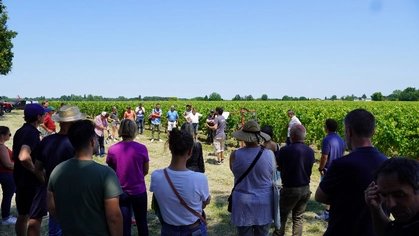
They strongly believe that knowledge exchange, capacity building and training should increasingly be based on peer-to-peer sharing and designed based on ‘working together’. The school’s motto — “collective intelligence, knowledge transfer and sharing” — guides students along a radically new path. They are working hard to maintain access to operational knowledge for those working in the field. And they rely on the strength of the collective and multi-stakeholder approach. They are strongly committed to transferring knowledge through numerous events in the field — very much aligned with Climate Farm Demo main objective!
Château Dillon is also involved in developing innovative teaching tools, such as simulators (for pruning, plot management, sprayer adjustment, etc.), ensuring that training is not dependent on the plant cycle and the seasons. Another of their major missions is to serve as a showcase site and a site for experimentation and innovation in the sector.
Therefore, in 2024, they created a 5-hectare experimental vineyard for assessing innovative practices that are both compatible with society’s expectations and economically viable. The primary aim is to create a reservoir of genetic diversity. This vineyard houses vine conservatories designed to safeguard the genetic diversity of grape varieties in the Nouvelle-Aquitaine region. The second objective is to test breakthrough scenarios. There is a long list of innovative techniques, including pruning, planting density, shading, soil conservation, robotisation, etc. And in the future, other parameters will be tested, such as energy and technical sobriety, diversification of production, agroforestry, reduction in the use of phytosanitary products, etc.
Château Dillon, 40 ha en AOC Haut Médoc – Crus Bourgeois Supérieur, situé au nord de Bordeaux, est l’une des 3 fermes viticoles de l’Agro Campus Bordeaux Gironde. C’est également l’une des fermes pilotes du projet Climate Farm Demo.
Le lycée agricole est convaincu que la montée en compétences et la formation doivent de plus en plus être basés sur les échanges entre pairs et être conçus sur la base d’un « travail en commun ». Sa devise est : « intelligence collective, transfert et partage des connaissances », afin de guider les étudiants sur une voie radicalement nouvelle. Il s’efforce de maintenir l’accès aux connaissances opérationnelles pour les acteurs de terrain et s’appuie sur la force de l’approche collective et multipartite. Il est également fortement engagé dans le transfert de connaissances par le biais de nombreux événements sur le terrain. Cela correspond tout à fait à l’objectif principal de Climate Farm Demo !
Il participe également au développement d’outils pédagogiques innovants, tels que des simulateurs (pour la taille, la gestion des parcelles, le réglage des pulvérisateurs, etc.), afin que la formation ne soit pas dépendante du cycle de la plante et des saisons. Une autre de leurs grandes missions est d’être un site vitrine et un site d’expérimentation et d’innovation pour la filière. Ainsi, en 2024, ils ont créé un vignoble expérimental de 5 hectares pour évaluer des pratiques innovantes, compatibles avec les attentes de la société et économiquement viables. L’objectif premier est de créer une banque de biodiversité génétique des cépages. Le deuxième objectif est de tester des scénarios de rupture. La liste des techniques innovantes est longue : taille, densité de plantation, ombrage, conservation des sols, robotisation, etc. Et à l’avenir, d’autres paramètres seront testés, comme la sobriété énergétique et technique, la diversification des productions, l’agroforesterie, la réduction de l’utilisation des produits phytosanitaires, etc.